


Choosing managed IT for CPA firms requires more than comparing response times or monthly pricing. Accounting firms operate under regulatory oversight, support audit engagements, manage payroll and SALT filings year-round, and rely on specialized financial software that must remain secure and available.
Because of this, CPA firms should evaluate IT providers based on operational understanding, compliance maturity, and long-term alignment. The right provider does more than fix issues. Instead, they understand how your firm works, how your software integrates, and how compliance requirements affect daily operations.
1. Do They Understand CPA Workflows Year-Round?
Tax season matters. However, CPA firms operate under pressure throughout the year.
- Nonprofit audits
- Government and contractor audits
- Bank-required financial statement audits
- Payroll processing
- SALT filings
- Bookkeeping and advisory services
Each of these services depends on secure document exchange, structured file storage, and strict deadline management. For example, during a nonprofit audit, teams must access archived documentation quickly while maintaining strict confidentiality controls.
Reliable IT support reduces friction during these engagements and protects client trust.
2. Do They Understand CPA Software Ecosystems?
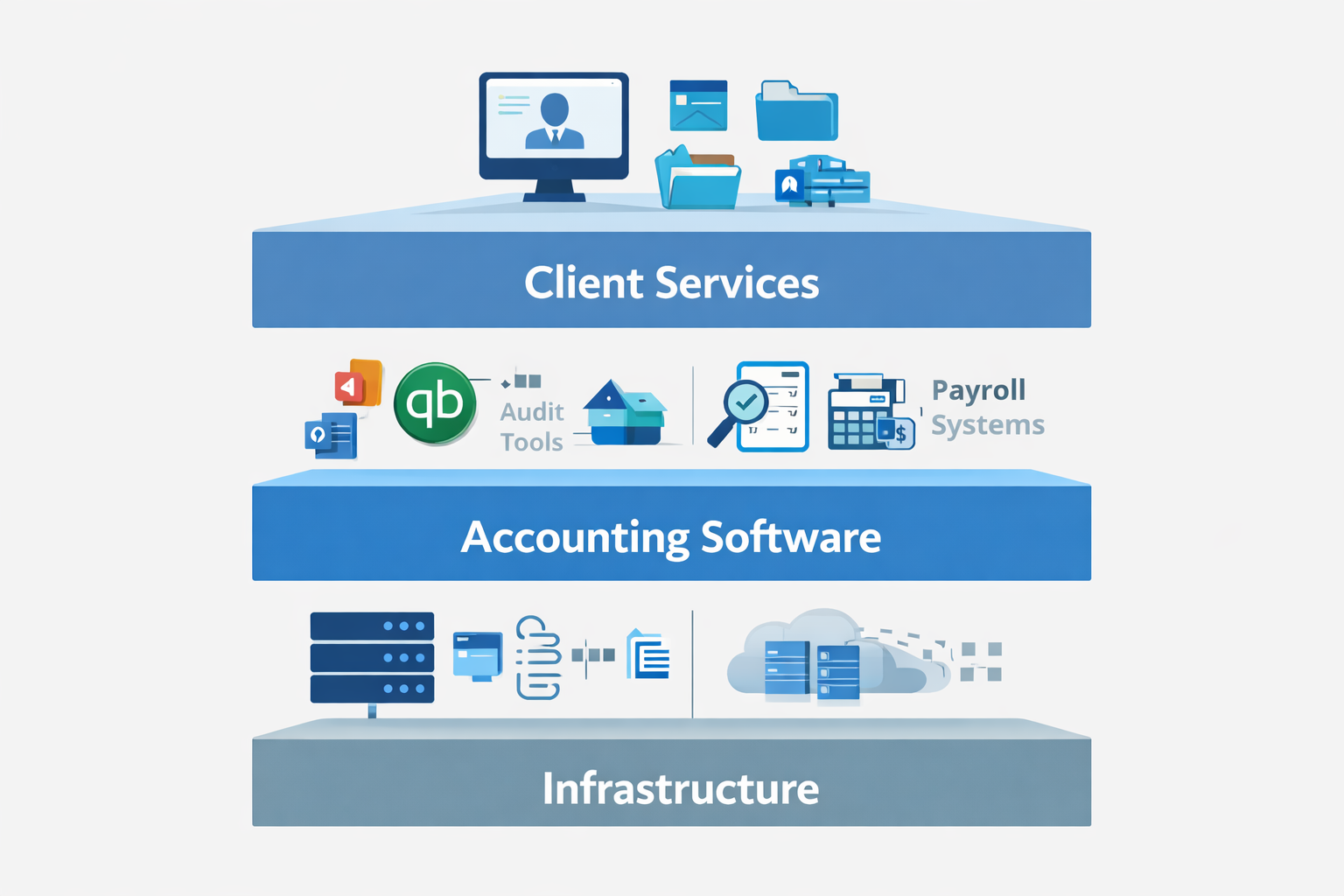
Managed IT for CPA firms must account for specialized applications. Most firms rely on platforms such as Microsoft 365, QuickBooks, Thomson Reuters, CCH, audit management tools, and secure client portals.
Each system introduces configuration, access control, and compliance considerations. For instance, Microsoft 365 requires proper multi-factor authentication and conditional access configuration. Similarly, QuickBooks environments must include secure backup validation and restricted administrative access.
If you have reviewed our guide on IRS IT security requirements for CPA firms, you know layered safeguards are essential. CPA firms handling Federal Tax Information must also align with the IRS Safeguards Rule.
Firms that specialize in accounting environments tend to understand these nuances more deeply. If you want to understand what true specialization looks like, review our guide on MSP specialization for accounting firms.
3. How Do They Approach Compliance and Documentation?
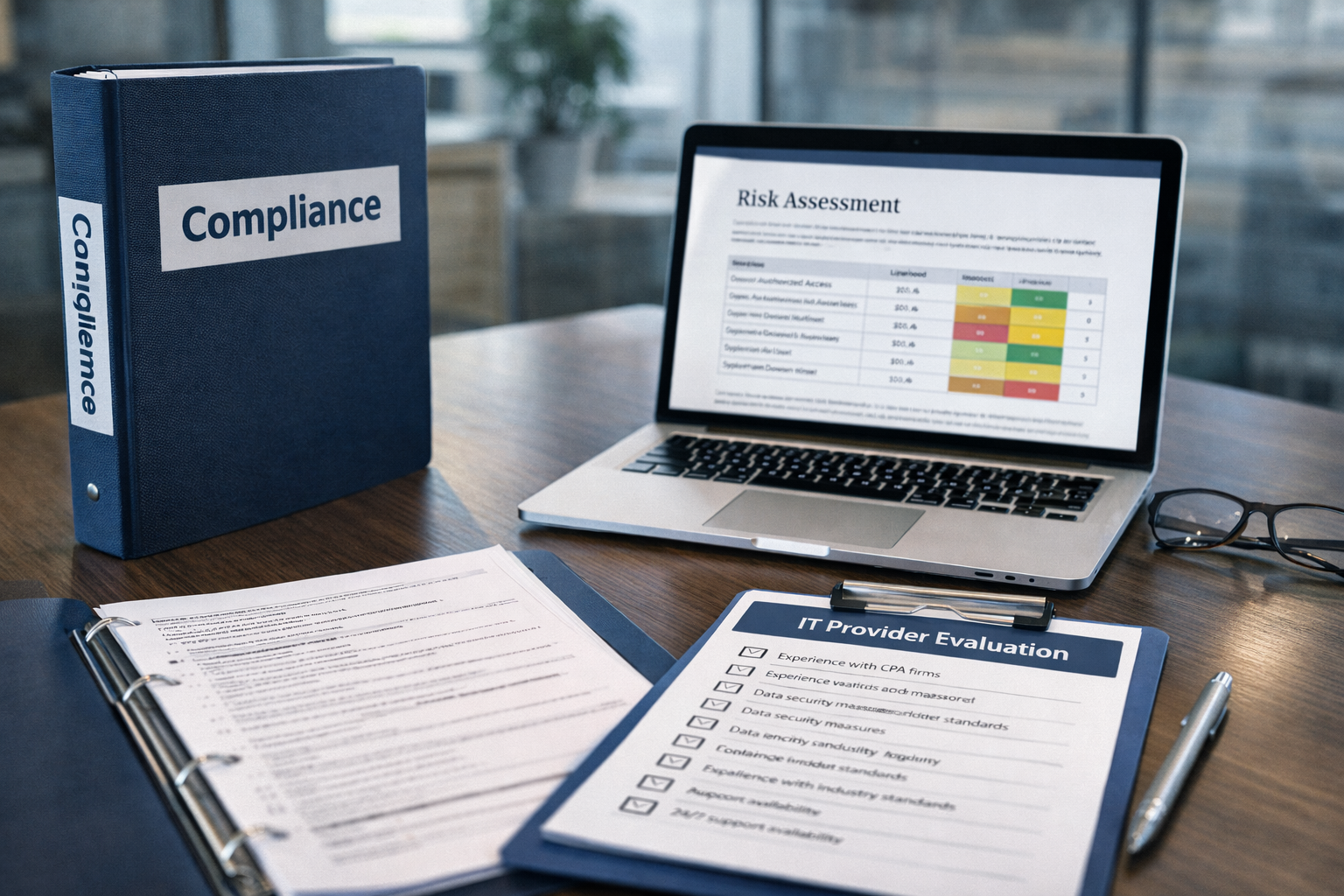
Compliance is not optional for CPA firms. Your IT provider should understand Written Information Security Plan expectations, risk assessment documentation, incident response planning, and backup validation testing.
If documentation does not reflect real infrastructure, compliance gaps develop quickly. For a deeper breakdown of documentation structure, see our article on CPA WISP requirements.
When evaluating managed IT providers, ask them to clearly explain how their controls align with written policies.
4. What Are Their Support Standards During Critical Deadlines?
Deadlines occur throughout the year. Audit reporting, payroll processing, and financial statement submissions create critical windows beyond tax season.
Therefore, CPA IT support should include defined response time standards, structured escalation processes, and proactive monitoring.
You may also want to review our guide on tax season IT preparation for CPA firms to understand how structured planning reduces operational stress.
5. Do They Provide Strategic Guidance or Only Reactive Support?
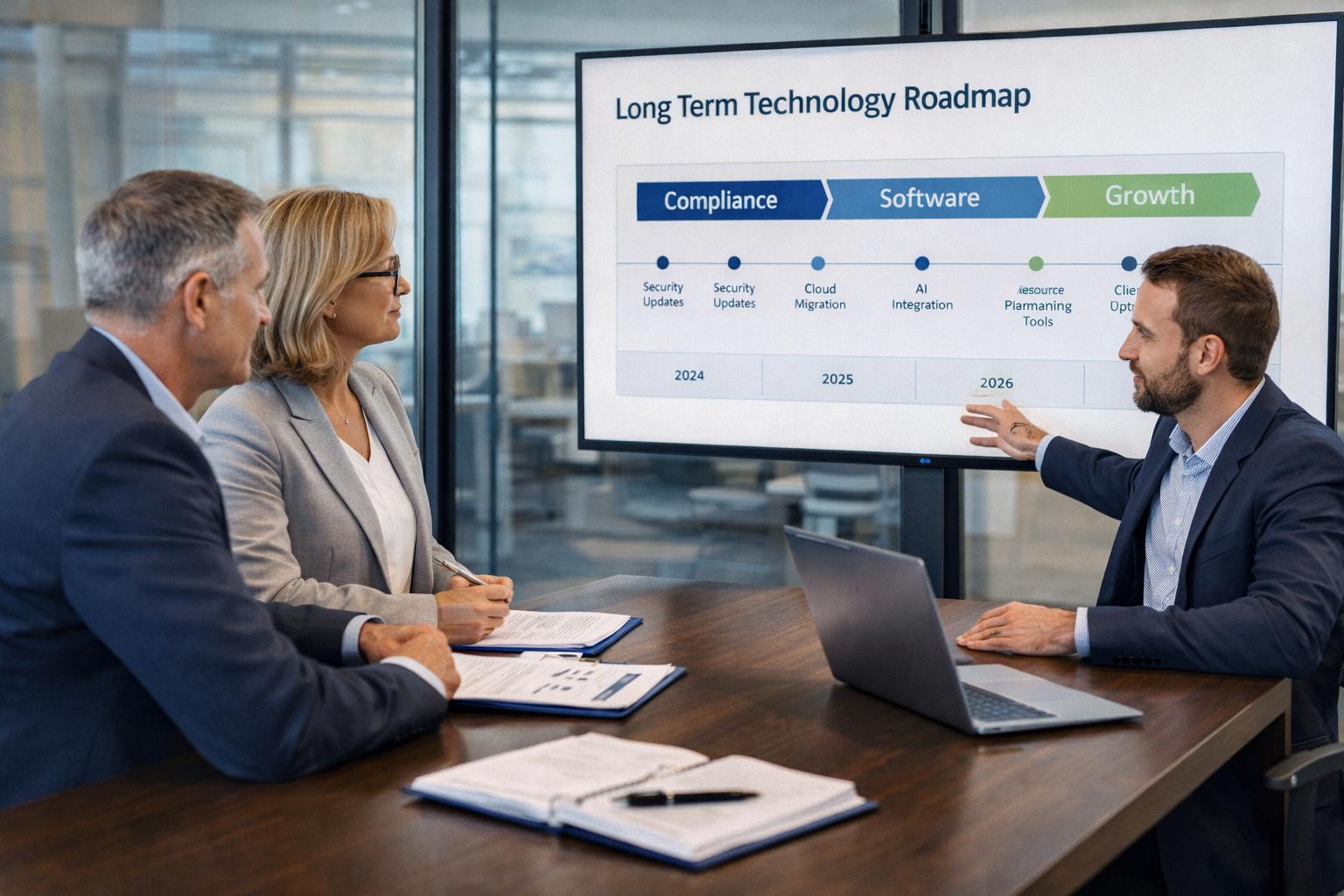
Technology in CPA firms evolves continuously. Software updates, regulatory changes, and growth in advisory services all impact infrastructure requirements.
A strong IT partner will conduct regular technology reviews, evaluate evolving risk exposure, and align IT planning with firm growth.
If your firm is evaluating managed IT pricing for CPA firms, compare not only cost, but also operational and compliance depth.
A Practical CPA IT Provider Comparison Checklist
- CPA workflow familiarity
- Accounting software expertise
- Documented compliance framework
- Structured risk assessment process
- Clear response time standards
- Backup validation and testing
- Incident response planning
- Strategic technology reviews
Next Step: A Structured CPA IT Evaluation
If your firm is comparing IT providers and would like a structured review of your current environment, we offer a CPA-focused IT strategy assessment.
Schedule a CPA IT Strategy Review
Frequently Asked Questions
What should CPA firms look for in managed IT providers?
CPA firms should evaluate workflow understanding, compliance maturity, accounting software expertise, and structured support standards.
Why is compliance important when comparing IT providers?
CPA firms operate under IRS Safeguards expectations and increasing insurance scrutiny. Proper documentation and control alignment reduce operational and regulatory risk.
Does managed IT for CPA firms cost more than generic IT support?
Specialized CPA IT support may include additional compliance and documentation layers. However, that structure often reduces long-term operational risk.