


For most CPA firms, cyber insurance is no longer optional. However, qualifying for coverage has become significantly more complex.
In 2026, most cyber insurance carriers require CPA firms to demonstrate:
- Multi-factor authentication across critical systems
- Endpoint detection and response
- Verified and tested backups
- Documented incident response plans
- Alignment with IRS Safeguards expectations
For a 10–25 employee CPA firm, failing to meet these requirements can result in higher premiums, coverage exclusions, or denied claims. The goal is not just to have insurance. It is to ensure your firm can qualify for and rely on that coverage when it matters.
Cyber Insurance Requirements for CPA Firms in 2026
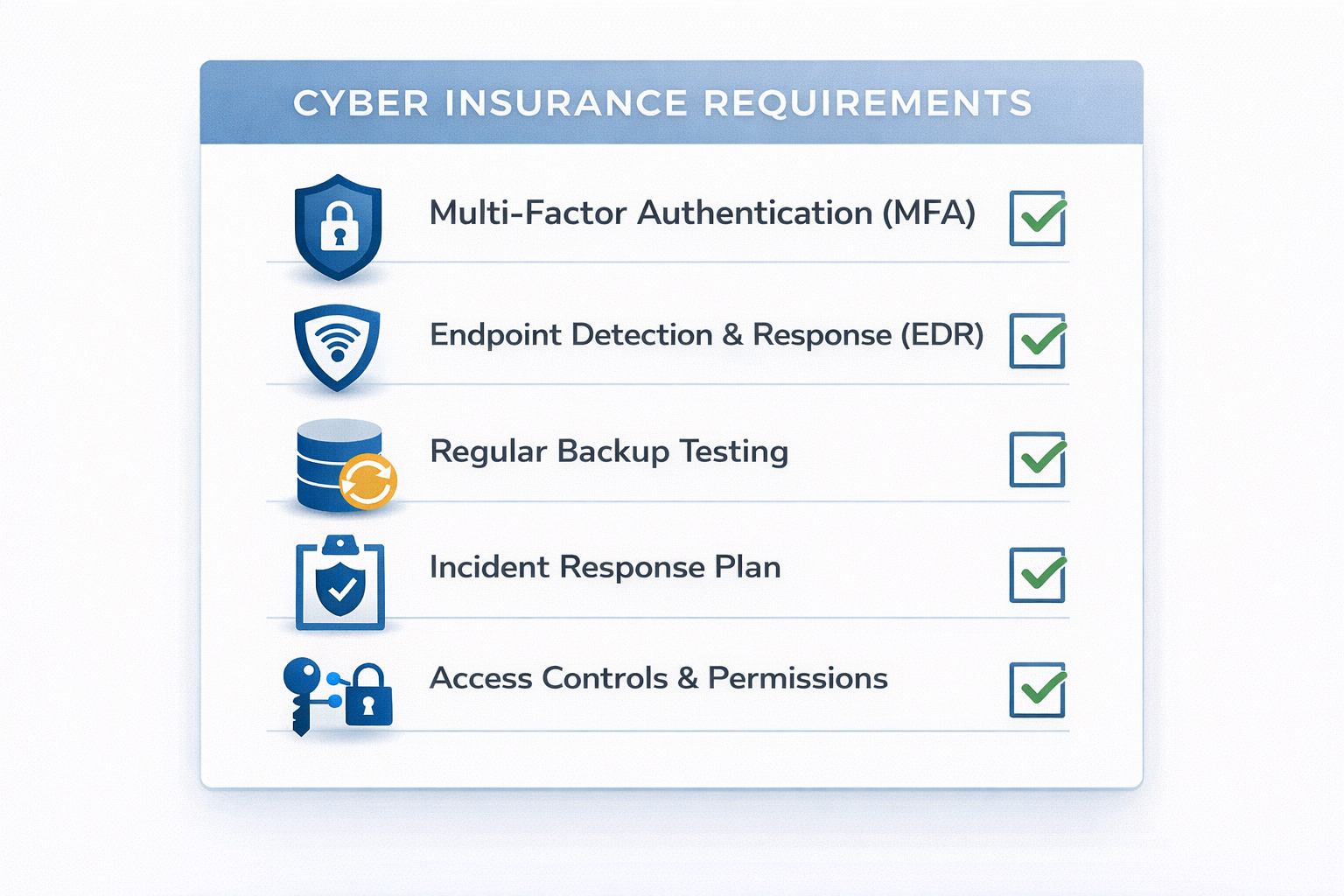
Insurance carriers have shifted from basic questionnaires to detailed technical validation.
Most policies now require:
- MFA for email, remote access, and administrative accounts
- Endpoint protection with monitoring capabilities
- Secure backup systems with documented testing
- Limited administrative privileges
- Ongoing patch management
- Incident response procedures
These requirements closely mirror the IRS Safeguards Rule, as insurers align policies with regulatory expectations.
Where CPA Firms Commonly Fall Short
Many CPA firms believe they meet insurance requirements. However, gaps often exist in documentation and validation.
- MFA enabled inconsistently
- Backups not tested regularly
- Security tools not actively monitored
- No formal incident response plan
- Policies that do not match real systems
These issues often surface during renewal or claims review. If documentation and implementation do not align, coverage may not apply when needed.
For deeper documentation expectations, review our guide on CPA WISP requirements.
Data Visibility and Record Volume: A Hidden Risk for CPA Firms

Another major factor impacting cyber insurance is the volume and location of sensitive client data.
Most CPA firms focus on securing tax software. However, sensitive data often exists across:
- Email attachments
- Shared folders
- Local desktops and downloads
- Archived audit files
Many firms have sensitive data in 5–10+ different locations, often without centralized visibility.
This creates real risk. From a security standpoint, it increases breach exposure. From an insurance standpoint, it raises questions about whether proper safeguards were in place.
In the event of a claim, insurers may evaluate whether your firm had control over where data lived. If data is widely distributed and unmanaged, coverage disputes can arise.
The IRS Publication 4557 emphasizes safeguarding taxpayer data across the entire organization.
This aligns with our breakdown of IRS IT security requirements for CPA firms, which highlights controlling access across all systems.
Cyber insurance readiness is not just about tools. It is about knowing where your data exists and ensuring it is protected consistently.
How Cyber Insurance Connects to IRS Safeguards Compliance

Cyber insurance requirements now closely align with IRS Safeguards expectations.
- Risk assessments
- Access controls
- Monitoring
- Incident response
If you have reviewed IRS IT security requirements for CPA firms, the overlap is clear.
Firms aligned with IRS Safeguards are typically better positioned during insurance renewal.
A Practical Cyber Insurance Checklist for CPA Firms
- MFA enforced across all systems
- Endpoint protection actively monitored
- Backups tested and documented
- Administrative access controlled
- Incident response documented
If these are unclear, your firm may struggle during renewal.
For provider evaluation, see how to compare managed IT providers.
Real CPA Firm Example
A 12-person CPA firm believed they were prepared for renewal. However, MFA gaps, undocumented backups, and missing response plans created risk.
After aligning controls and documentation:
- Coverage was approved
- Premium increases were minimized
- Risk exposure decreased
Next Step: Align Security, Compliance, and Insurance
If your firm is unsure whether it meets current requirements, the next step is clarity.
Schedule a CPA IT Strategy Review
Frequently Asked Questions
What cyber insurance requirements do CPA firms need?
MFA, endpoint protection, backup validation, and documented security controls are typically required.
Why does data visibility matter?
Insurers evaluate whether firms understand where sensitive data exists and how it is protected.
How does this connect to IRS safeguards?
Most insurance requirements align closely with IRS Safeguards expectations.